Kalpaka Charitable Trust – Adopting the Needy | Kalpaka


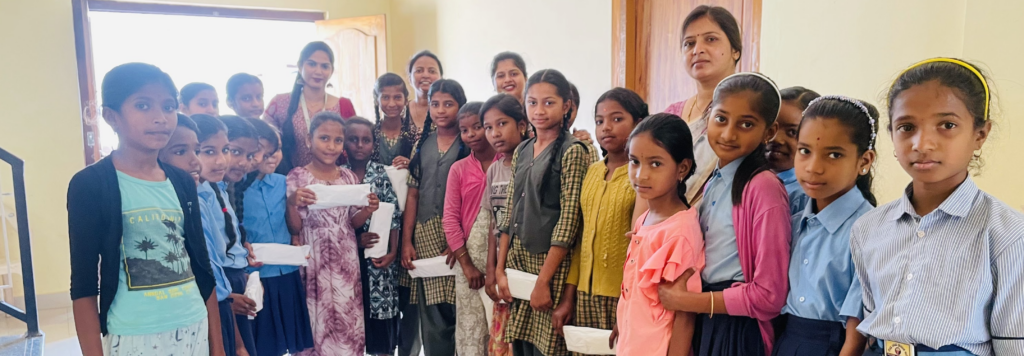
Menstrual Hygiene Awareness for 40 School Girls in Kyathanahalli – Phase II

August 15, 2026
Sarkari Hiriya Prathamika Shaale, Kyathanahalli
When a Classroom Became a Safe Space for Questions
For young girls in rural schools, growing up brings changes that no textbook fully prepares them for. Menstruation arrives as a natural event, but without the right information and basic supplies, it can feel confusing and isolating. Many girls sit through classes wondering what is happening to their bodies.
Without adequate menstrual hygiene awareness and access to sanitary products, some girls may also find it difficult to manage their periods comfortably at school.
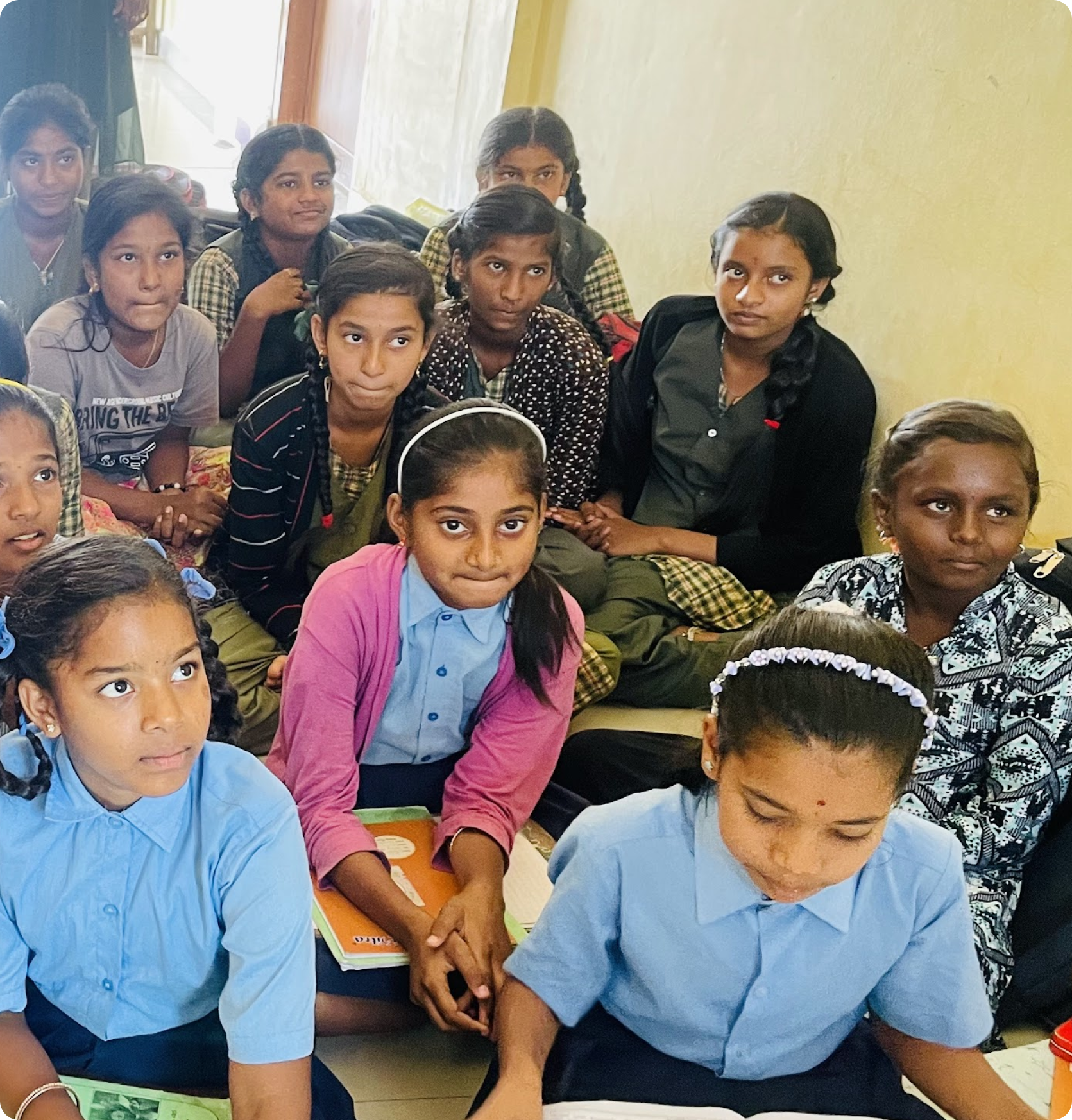
This reality came into clearer focus when Kalpaka Foundation received a letter from Sarkari Hiriya Prathamika Shaale in December 2025. The school shared a simple but important concern—several female students lacked regular access to menstrual hygiene products. This gap was affecting their comfort in school and their confidence during their growing years.
Kalpaka Foundation reviewed the request and recognized it as urgent. Menstrual health is not a separate issue from education. The two are deeply connected. When a girl is uncertain or unprepared during her cycle, her ability to fully engage in learning is affected.
Menstrual Hygiene Awareness and Access: Two Gaps That Needed Filling at Once
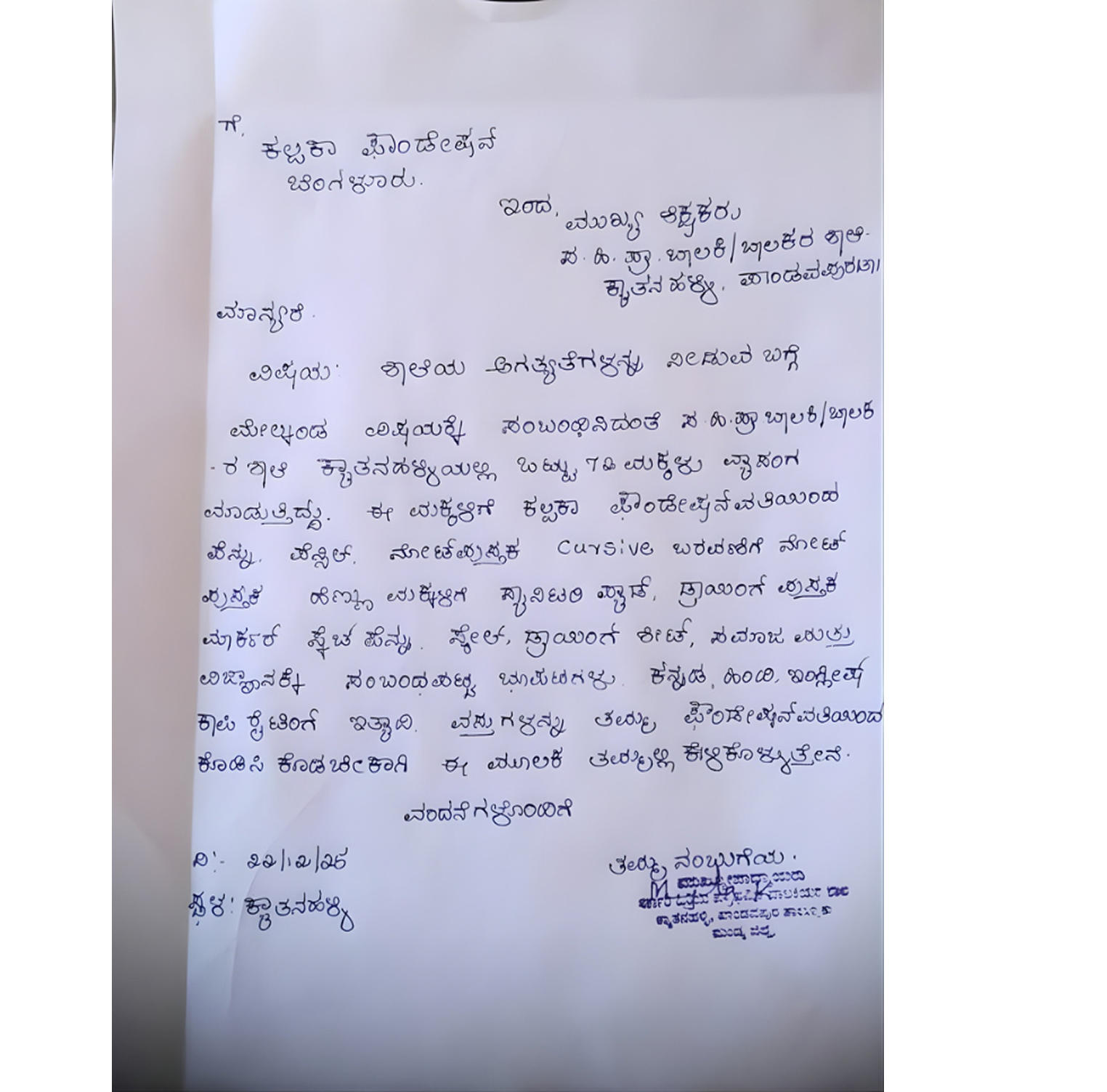
In Kyathanahalli, the situation had two clear layers. First, there was the lack of sanitary products due to financial constraints. Second, and equally important, there was a lack of awareness. Many girls had learned about menstruation through whispers, myths, or silence. They did not know why periods happened, how to maintain hygiene, or what was normal and what was not.
In moments like these, what was missing was not just information, but the space to express what they didn’t understand.
“The moment a girl finds her voice, she begins to find her strength.”
The school wanted both concerns addressed together. Products without awareness would not build lasting confidence. Awareness without products would leave the girls with knowledge they could not act upon.
The Morning of March 2, 2026
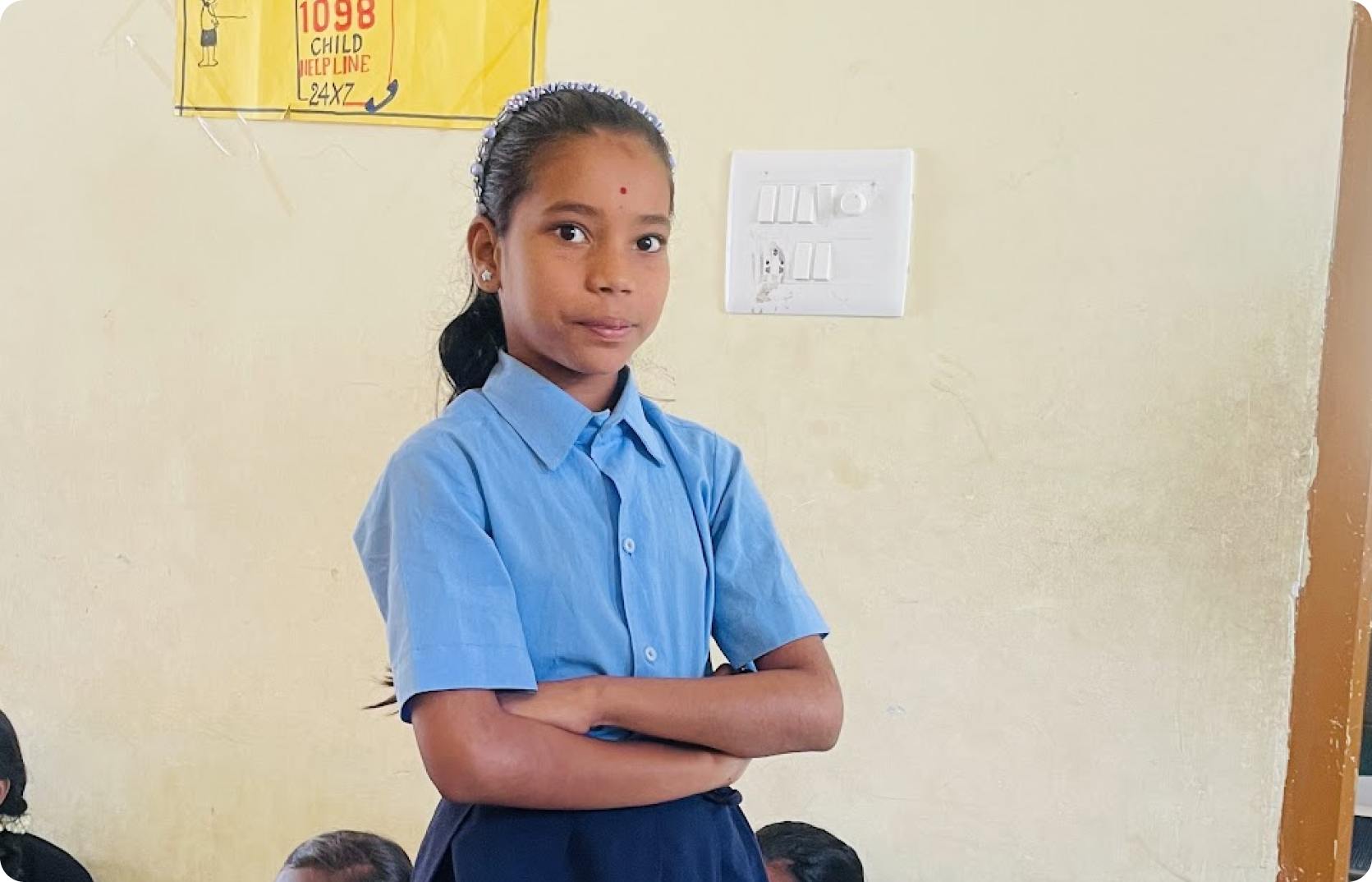
When the Kalpaka team arrived at Sarkari Hiriya Prathamika Shaale, the school day had already begun. Girls sat on the floor in a simple classroom. Sunlight came through open windows. A few looked curious. Most looked nervous.
The team started with a gentle icebreaker — a few simple, relatable questions that made the young girls laugh and relax. Within minutes, shoulders unclenched, and a few hands went up hesitantly.
The menstrual hygiene awareness session moved through basic topics: what menstruation is, why it happens, how often it occurs, and what the body needs during those days. The team taught the girls how to use a sanitary napkin properly and how to dispose of it safely. Questions were addressed openly and with kindness; no question was dismissed, no fear was laughed at. Girls were told that periods are not dirty, not a punishment, and not something to hide. After the session, the team distributed sanitary napkins to 40 female students.
What the Initiative Set Out to Achieve
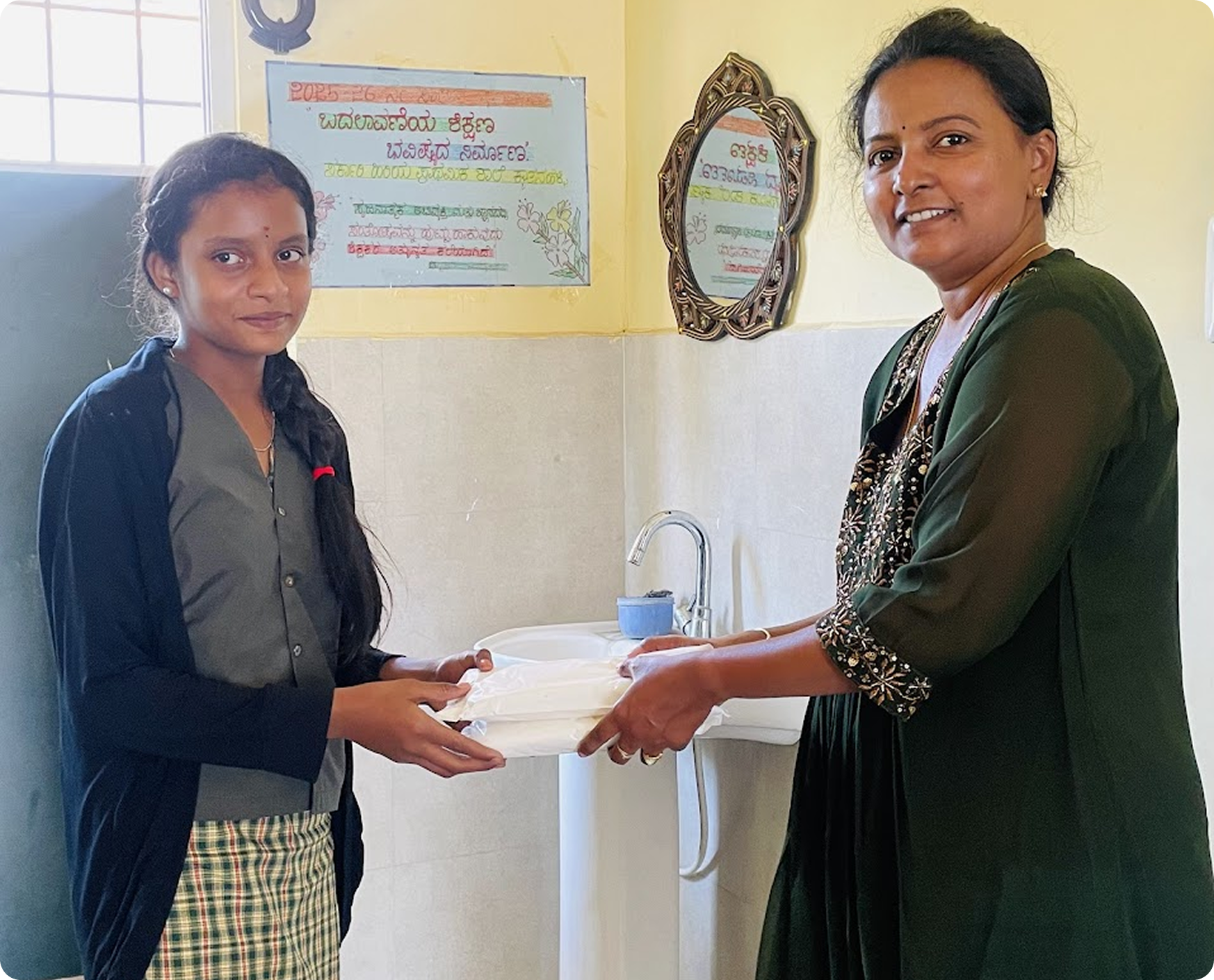
Kalpaka Foundation designed this effort with four specific goals woven together: to provide access to sanitary napkins for every girl who needs them at the school, to share accurate information about menstruation and hygiene in a safe and age-appropriate way, to remove fear and shame by normalizing conversations around periods, and to help reduce the possibility of girls missing class because of challenges related to menstrual hygiene.
These goals were not ambitious for the sake of ambition. They were practical, measurable, and rooted in what the school had directly asked for.
Moments That Broke a Long Silence
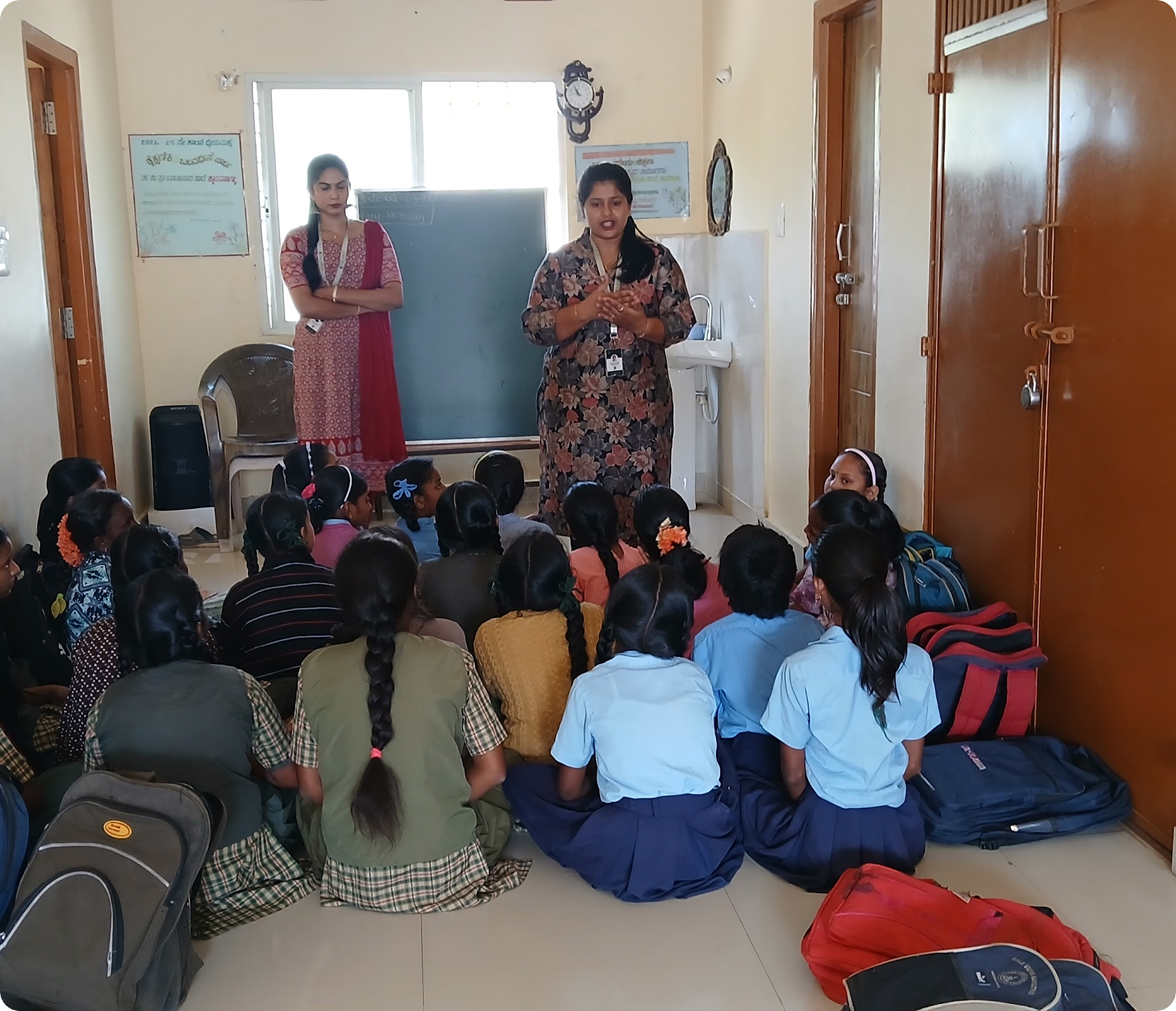
A girl in the second row raised her hand halfway through the session and asked, “Does using a napkin hurt?” The volunteer explained patiently, and the girl nodded, visibly relieved.
Another student stayed behind after everyone left. She said, “My mother never told me any of this. I wanted to ask someone about this but didn’t know whom to ask.” The volunteer listened without interrupting. Then the girl smiled and walked away, holding her packet close to her chest.
These simple moments transformed how the girls viewed their bodies and the essential process of menstruation. While what we did was small, it made a big shift in the girls’ mindset.
What This Experience Taught Us
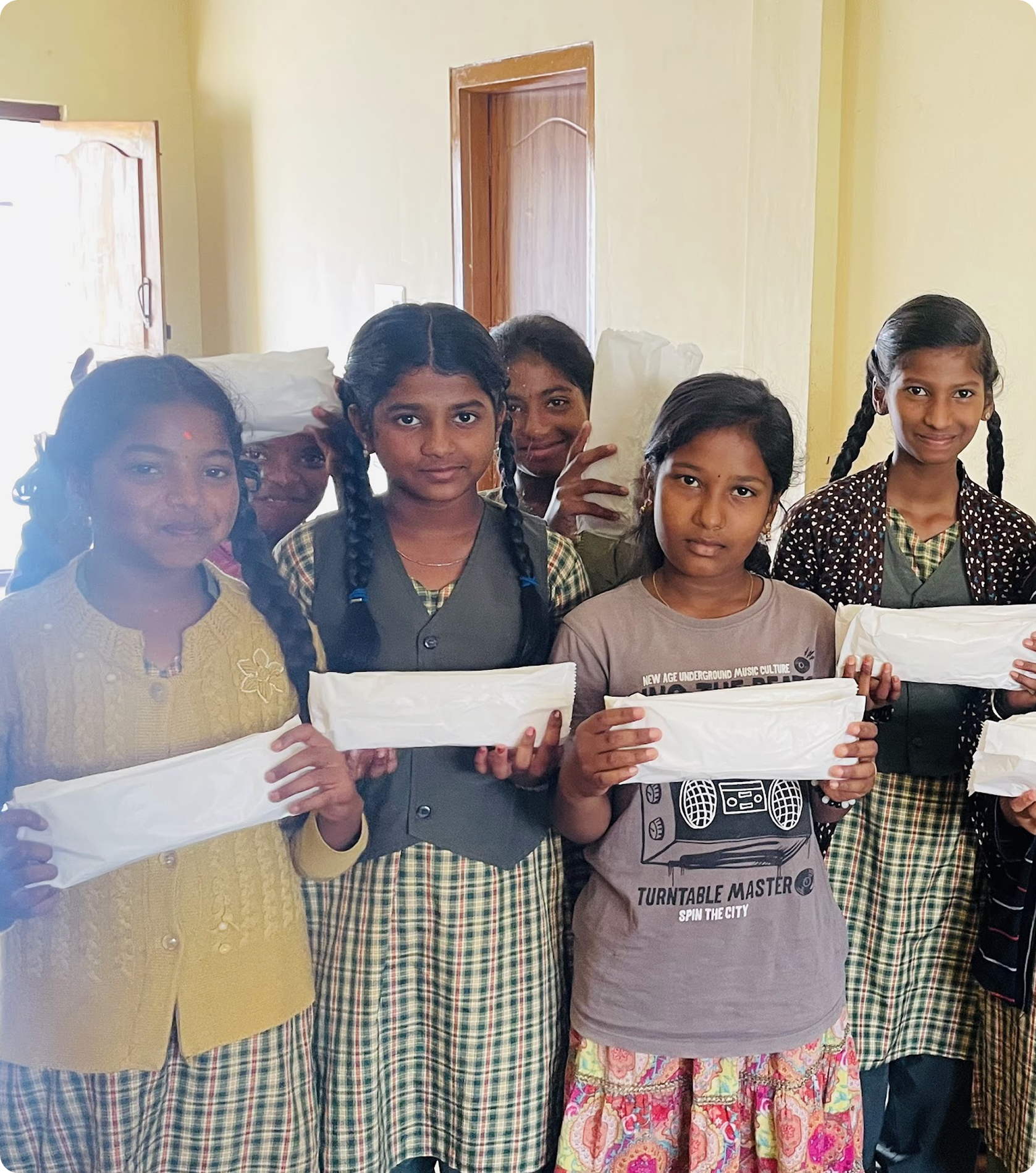
This initiative reaffirmed something important: the need for menstrual hygiene support is far greater than what reaches formal requests. For every girl who raised her hand that day, there are others still sitting in silence elsewhere. What we did was small in scale, but it proved how ready young girls are to learn — when someone gives them a safe space to ask.
Moving forward, Kalpaka Foundation will continue reaching more schools, building on this model of spreading awareness while distributing sanitary pads, because knowledge without products leaves girls helpless, and products without knowledge leave them uninformed. Both must work together.
Menstrual health support is not a luxury. It is a basic need. When we meet that need, we are not doing anything extraordinary. We are simply doing what should have been done long ago.
Let’s help her, because every girl deserves to learn without interruption.
Frequently Asked Questions
1. How many girls has Kalpaka Foundation supported with sanitary pad donations?
Kalpaka Foundation has provided sanitary pads to girls in multiple government schools and tribal communities. During 2026 initiatives, sanitary pad distributions reached 40 girls at Kyathanahalli Government School, Mandya; 220 girls at Puttenahalli Government School, Bengaluru; and girls in the tribal community at Manchegowda Hadi, H.D. Kote.
2. Does Kalpaka Foundation provide sanitary pads only to tribal girls?
No. Kalpaka Foundation provides menstrual hygiene support to girls in both tribal communities and s in government schools. Its initiatives have included sanitary pad distributions for schoolgirls as well as girls and women in underserved communities.
3. How many children has Kalpaka Foundation benefited through its initiatives?
In 2025, Kalpaka Foundation’s documented projects benefited 55+ children, while its 2026 projects have benefited 433+ children so far. These initiatives span education, tribal welfare, environmental support, women’s welfare, and other community-focused activities.
4. What is the minimum donation amount I can make to Kalpaka Foundation?
You can make a donation to Kalpaka Foundation starting from ₹25. The foundation also highlights ₹25 as an amount that can support the planting of one seed ball through its environmental initiative.
5. How can I support Kalpaka Foundation’s menstrual health and hygiene initiatives?
You can support Kalpaka Foundation’s menstrual health and hygiene initiatives through donations and community support. Your contribution can help extend menstrual hygiene awareness and access to sanitary products to more girls and women in underserved communities.
Want to be part of this?
Our work grows when more hands join in. Whether you have an hour or a year, there’s a place for you here.
Why Sanitary Pad Donations Keep Girls in School
Address
Address: No. 98/2, 1st Floor, SC Complex, Surabhi Nagar West, 8th Phase, J. P. Nagar, Bengaluru, Karnataka 560076
- Email: info@kalpaka.org
Support a Cause & Avail Tax Benefits
Kalpaka Foundation is a registered NGO under the Income Tax Act, and all donations made to us are tax-exempt under Section 80G of the Income Tax Act, 1961. Your contributions help us drive impactful initiatives while providing you with tax benefits.
For more details, feel free to contact us or refer to the official registration details.
Kalpaka Foundation – AAFTK6965R
(URN: AAFTK6965RE20241, Valid from AY 2026-27)